
Homeowners' pick for heating and cooling across north Florida and the Suwannee Valley
One Room Is Always Too Hot or Too Cold
You have one room that never matches the rest of the house. The back bedroom sits eight degrees warmer in August, or the bonus room over the garage stays cold all winter while everybody else is fine. You have closed vents, moved furniture and cranked the thermostat. We diagnose and fix room-to-room temperature problems across Florida, Georgia and South Carolina. Call us and describe the room.
Call (888) 381-2953- Real people on the phone
- 7 days a week
- Quote in writing before any work
Taking calls until 5:00 PM ET
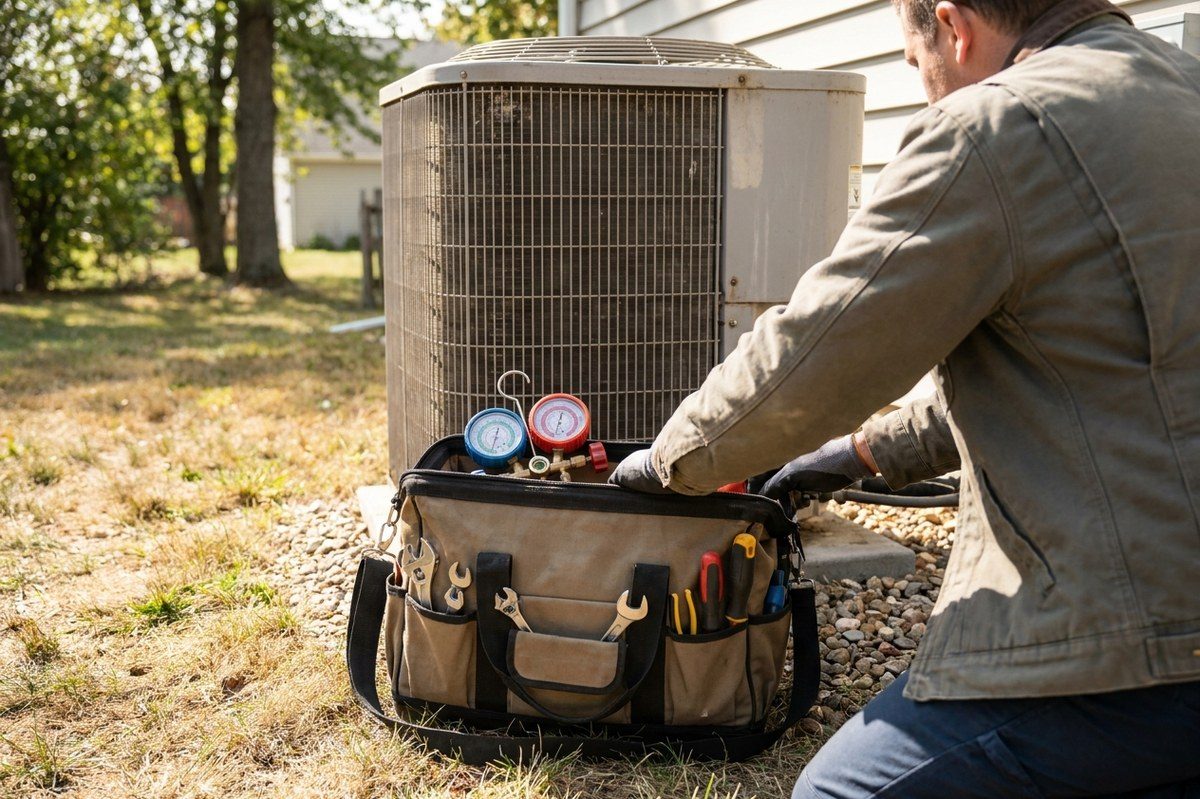
By the Suwannee Valley AC & Heating service team · reviewed by our working technicians
Why one room drifts while the rest of the house is fine
Most of the time it comes down to how much air actually reaches that room compared to how much heat it gains or loses. A room at the end of a long duct run gets whatever air is left after the closer registers take their share. Rooms over garages, additions built later, and rooms with two or three exterior walls lose and gain heat faster than an interior hallway bedroom. Add a duct that got crushed in the crawlspace or an attic run that came loose at the boot, and the math stops working. The system is not broken. The delivery to that one room is.
Airflow, duct design and the things we find in attics
On sandy-soil homes around here, a lot of ductwork runs through hot attics or under the house, and flex duct sags, kinks at turns and pulls apart at connections. We have found registers blowing straight into insulation. We have found a supply trunk sized for the original house feeding an addition that doubled the square footage. Long runs with too many bends lose air to friction. Undersized returns are just as common, because a room with plenty of supply and no way for air to get back out will pressurize and stop taking air. Sealing, resizing or rerouting one run often fixes the whole complaint.
Thermostat placement and insulation
Your thermostat only knows the temperature of the wall it hangs on. If it sits in a cool interior hallway, the system shuts off before the sunny west bedroom catches up. Put it near a kitchen, a lamp or a supply register and it reads high and short cycles. Insulation matters just as much. Attic insulation gets thin or blown aside around knee walls, and rooms over garages usually have almost nothing under the floor. Single pane windows on the afternoon side of the house can add more heat than one register can carry away. We look at both before recommending equipment changes.
What we measure on the visit
We start with real numbers instead of guesses. We check supply and return temperatures at the equipment and at the problem room, then measure airflow at the registers to see how much air that room is actually getting. We check static pressure across the blower, which tells us whether the duct system as a whole is choked. We inspect the duct run serving that room end to end, looking for disconnects, crushed sections and missing insulation. We compare thermostat reading to actual temperature in the affected room. We also check filter condition, blower operation and refrigerant performance, since a weak system shows up worst in the farthest room.
The realistic fixes, cheapest first
Sometimes it is small. Repairing a disconnected duct boot, sealing leaks, straightening a kinked flex run or adjusting dampers can even out a house in one visit. Adding a return to a closed-off bedroom is often the fix when a room feels stuffy and warm with good supply air. Beyond that we look at adding or upsizing a supply run, adding attic insulation, or installing a small ductless head for a converted garage or a Florida room the main system was never sized to handle. Zoning makes sense on two-story homes. We tell you what the measurements support and what it will actually change.
One Room Is Always Too Hot or Too Cold — common questions
Should I close vents in other rooms to push more air to the hot one?
No. Closing registers raises pressure in the duct system, which increases leakage and strains the blower. You usually lose more air than you redirect. Balancing dampers set correctly at the trunk is the proper way to shift airflow.
Will a bigger AC unit fix my hot bedroom?
Almost never. If the duct to that room cannot deliver air, a larger system just moves more air everywhere else and short cycles. Oversizing also hurts humidity control. Fix the delivery problem first, then size equipment to the house.
Can you fix a room over the garage?
Usually yes. Those rooms need attention on both sides, more conditioned air in and better insulation under the floor and behind the knee walls. When the duct run is too long to help, a ductless head for that room is often the practical answer.
How it works
- Step 1
Tell us the symptoms
You describe what changed. No cold air, a breaker that keeps tripping, water near the air handler, a smell, a noise. That gives us a head start on parts before we ever leave the shop.
- Step 2
We diagnose on site
A technician checks the thermostat, the electrical side, airflow through the filter and coil, refrigerant behavior and the outdoor unit. We look at the whole system, because a frozen coil usually points somewhere else.
- Step 3
You decide the repair
We explain what failed, what it takes to fix it, and how long the rest of the system is likely to hold up. You pick the repair. We do not start work you did not approve.
- A real person answers
- Open 7 days
- Written quote before work starts
Why homeowners call us
- Rural routes are normal for usWe drive long stretches between calls and we plan for it. Trucks carry the common heat pump and air conditioner repair parts so a diagnosis does not turn into a second trip on a hot afternoon.
- Heat pumps and sandy soilMost homes we visit run a heat pump, and sand, lawn clippings and pollen pack the outdoor coil fast. We clear it, check the defrost side in winter, and show you what we found before we close it up.
- Well water housesHomes on well water bring their own quirks, from pump-driven electrical noise to hard water on drain lines and condensate pans. We know where those systems clog and where the slow leaks hide.
- Heating repair tooCold snaps in this region are short and hard. We do heating repair and heater repair on heat pumps, strip heat and furnaces, so one crew handles your system in July and again in January.
- All major brands, gas & electricOne independent crew for Carrier, Trane, Lennox, Goodman, Rheem and more.
- Straight answersIf a system is not worth repairing, we say so, often right on the phone.
About this guide
Safe checks done and it still misbehaves? That's a real fault
Bring your notes from the checks to the call and booking takes no time.
- A real person answers
- Open 7 days
- Written quotes
- All major brands
- Gas & electric
Rather not call? Get a free quote →